
Product details
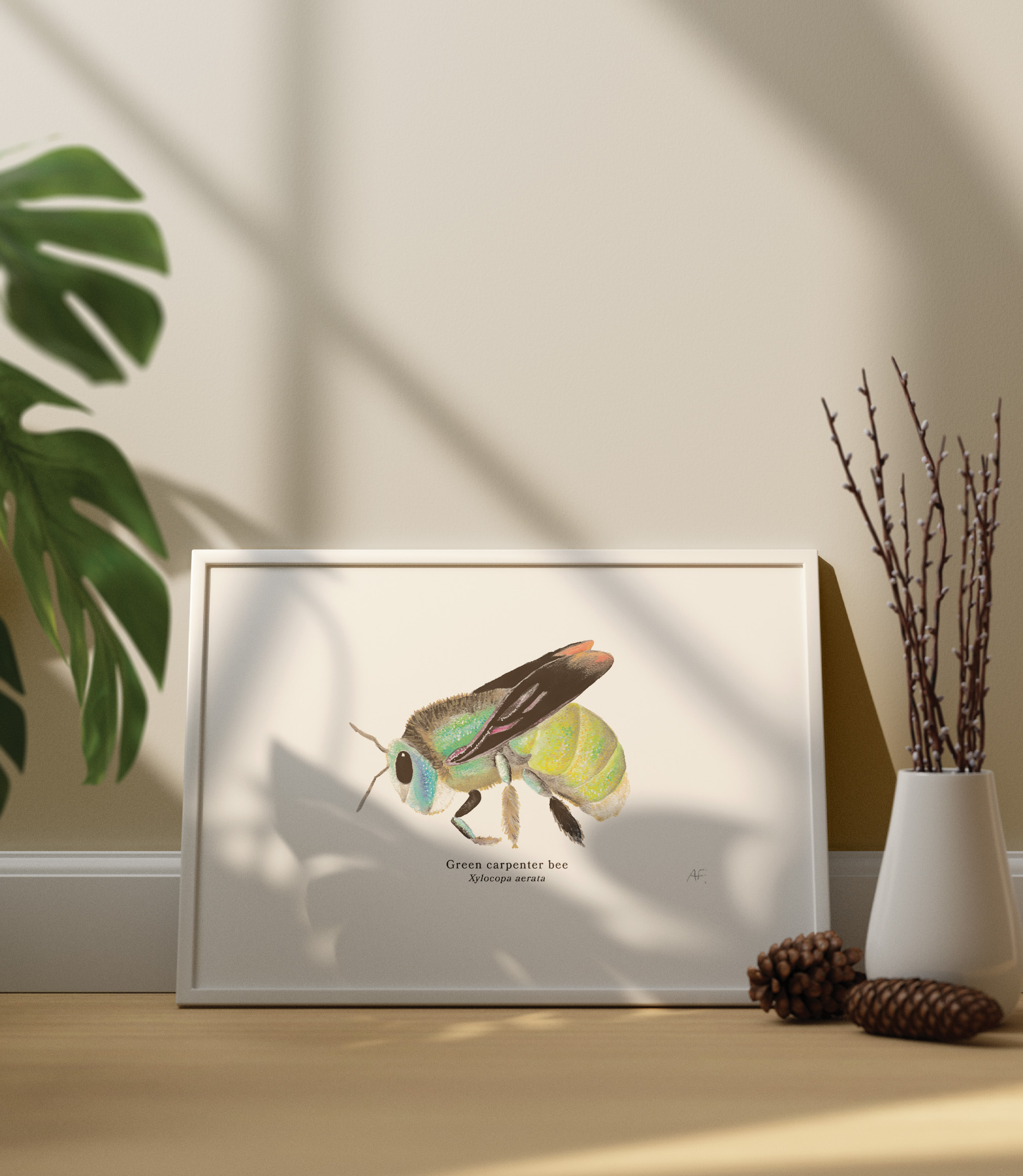
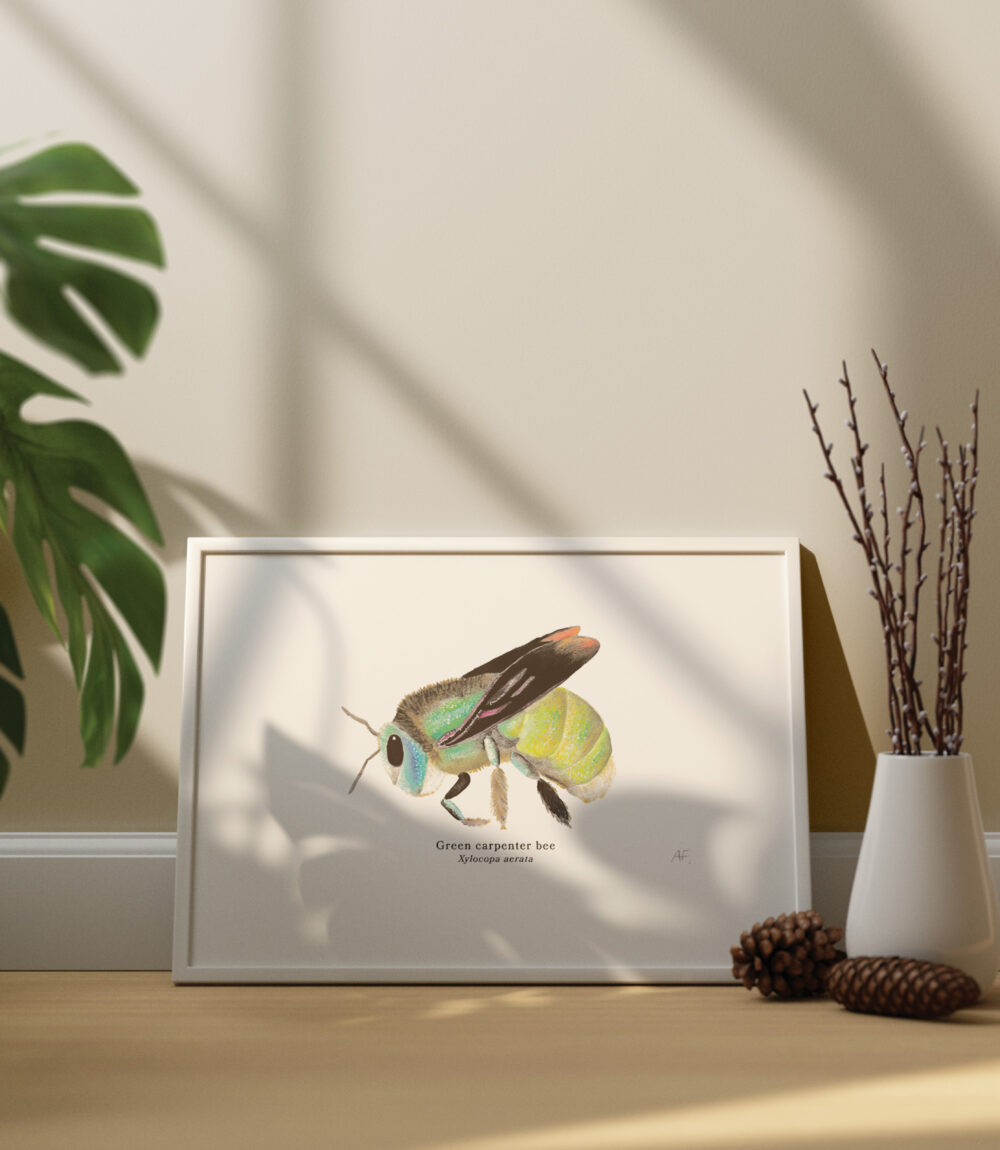
Species Name
Want to include the species name (common and scientific) below the illustration? Let me know in your order.
What you’ll get
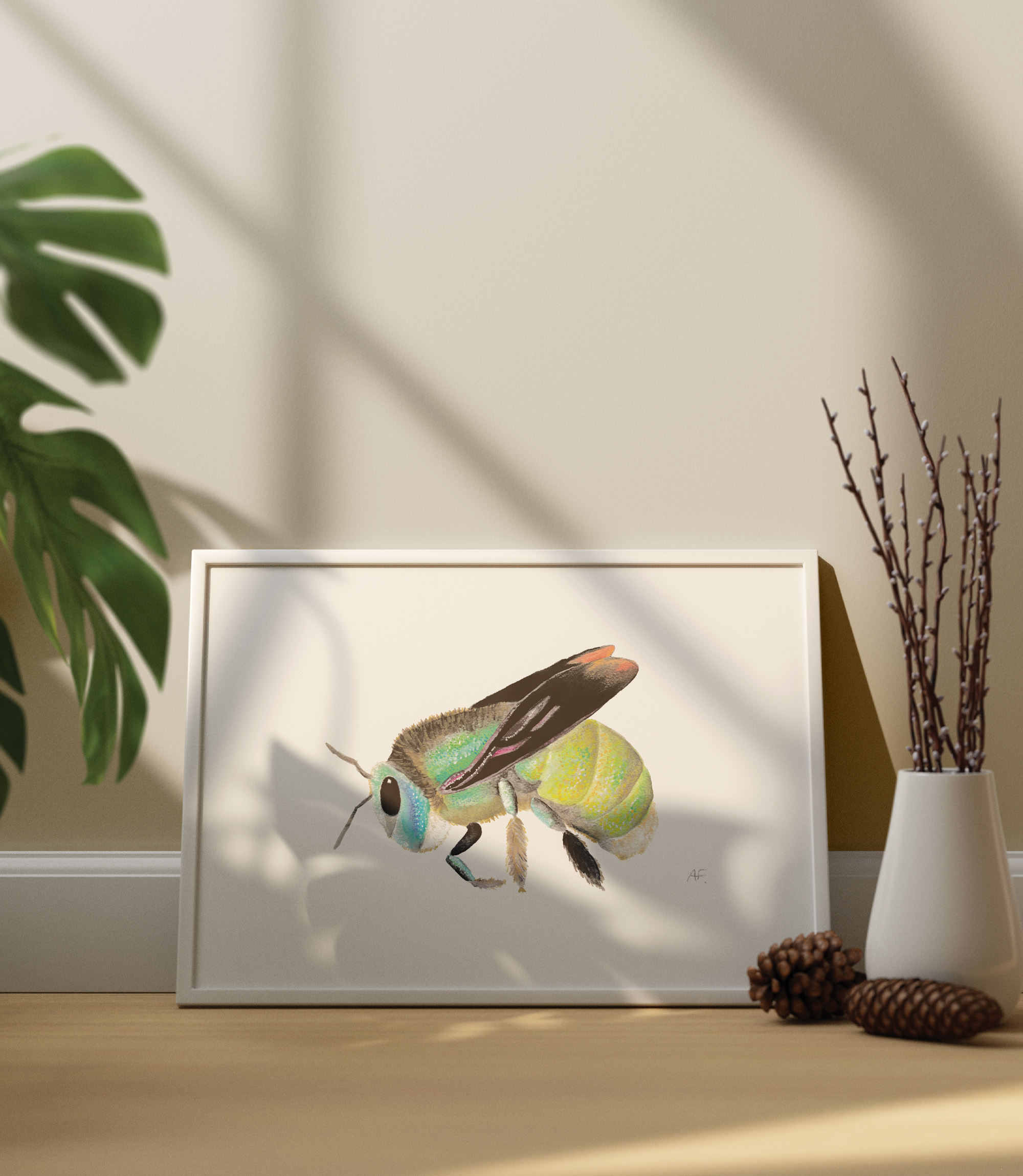
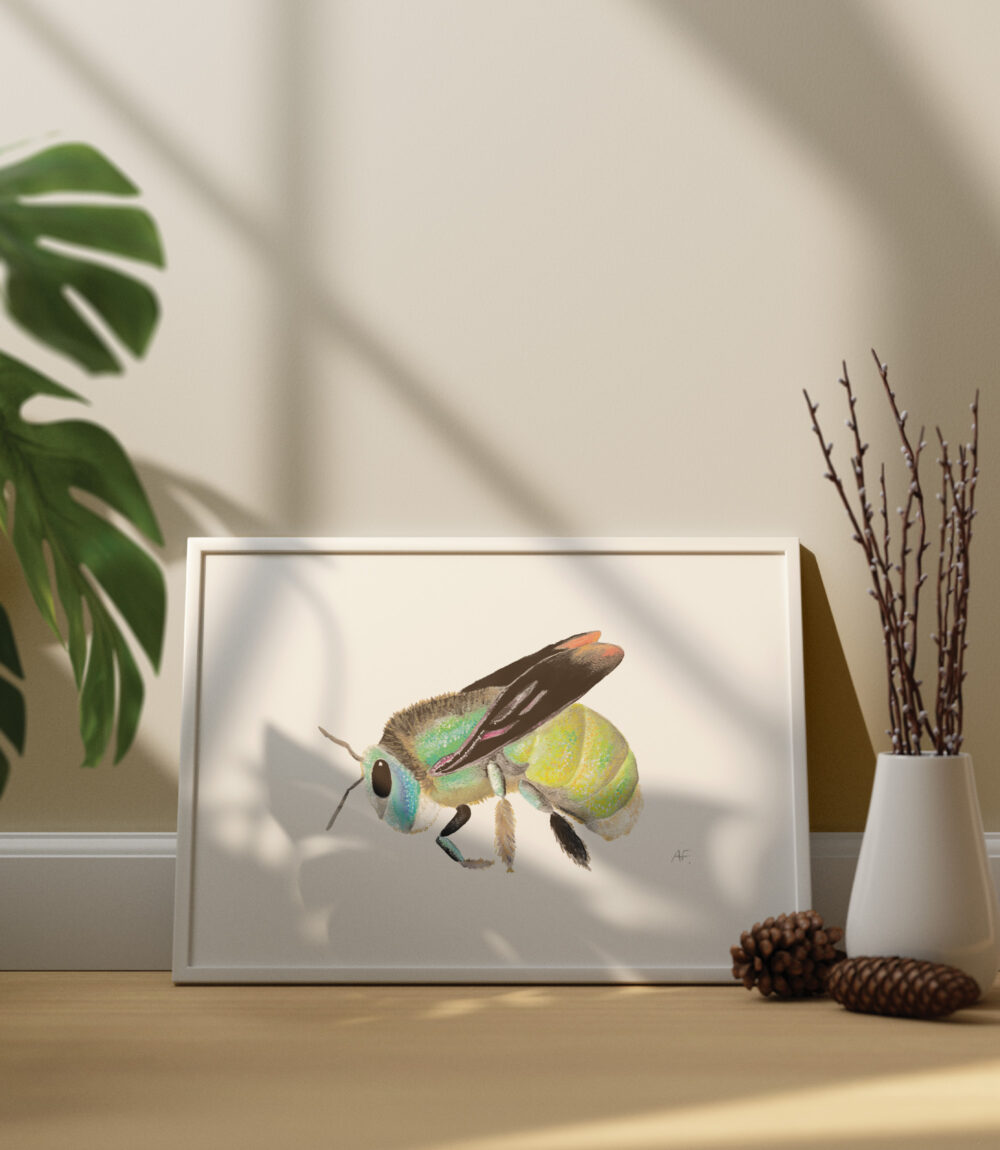
White space is added to the digital version of the artwork to accommodate a matboard. The artwork will be landscape orientation.
My paintings are printed onto fancy gold fibre gloss (310gsm) paper. This paper makes the colours pop without the in-your-face type of reflective gloss.
Time Frames
I’ll ship your order within two weeks of receiving it (but hopefully sooner)!
Shipping is through Australia Post, with a flat rate of AU $11 (domestic) or AU $29 (international). I’m always on the hunt for cheaper shipping alternatives!
Got a question? Want to customise?
Reach out! I’ll be stoked to help.
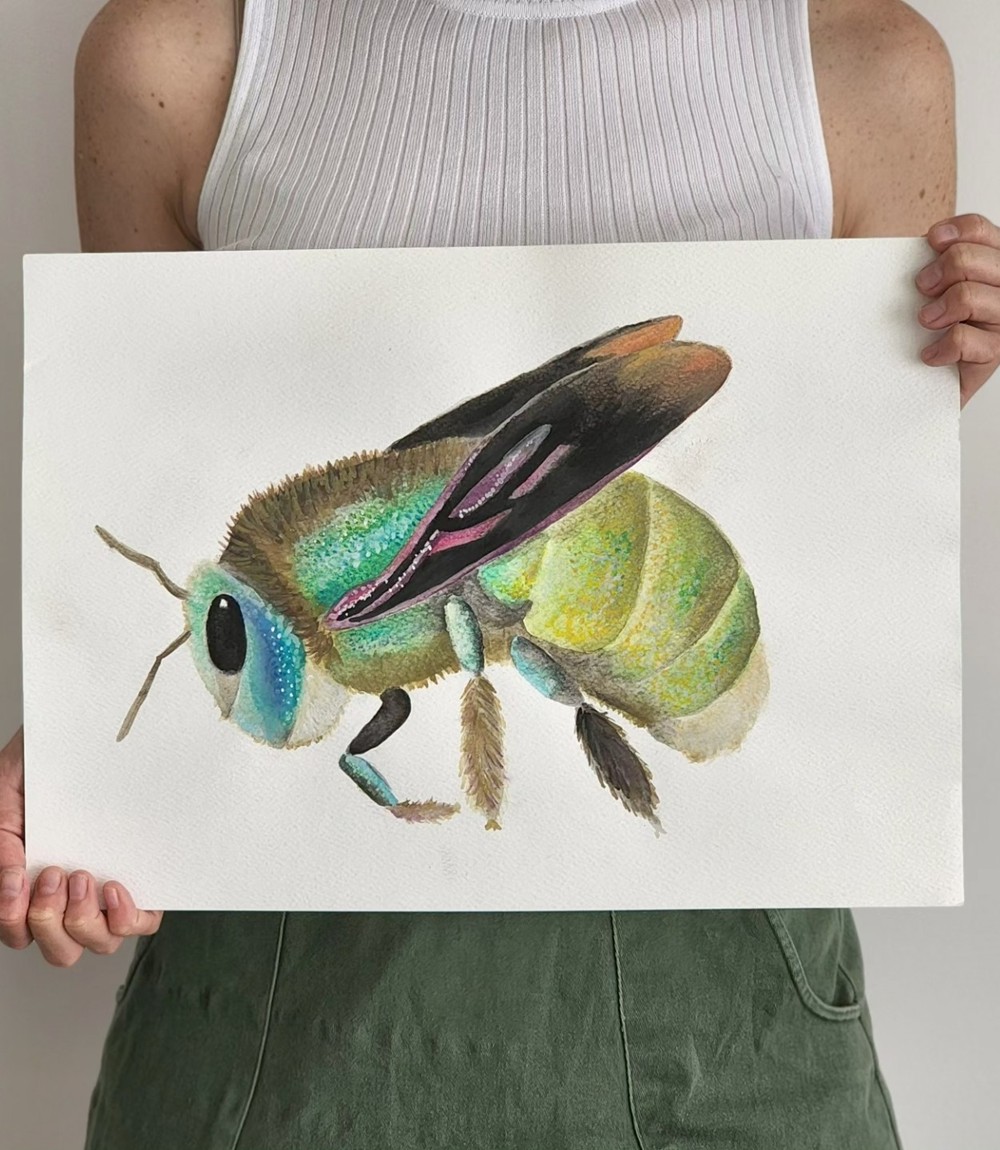
Meet the Green Carpenter Bee
Xylocopa aerata
At almost an inch long, green carpenter bees are the largest native bee in southern Australia. They are one of over 2000 native bee species (only 11 of which are stingless!).
Green carpenter bees live in tunnels inside dead banksias and grass trees. The female bees munch their way through dead wood to create these tunnels, generating sawdust along the way, which they use in the construction.
These guys, like many solitary bees use buzz pollination, which means they fly up to a flower, grab onto it and jiggle (like a whole body twerk). This makes a high pitched buzzing noise that helps shake out all the tucked away pollen. This is a specific method of pollination that is crucial in the reproduction of a lot of native plants.
It’s unlikely you’ll ever be stung by a carpenter bee. The boys don’t have stingers and the girls are busy munching away building tunnels so don’t have much time to bother you (unless threatened).
These little heroes are thought to now be on the brink of extinction following the 2019 bushfires that tore through Australia. Prior to this they had already experienced localised extinction in some parts of Australia as a result of land clearing and fires. Researchers and volunteers are trying to help their populations out by creating habitats for them out of artificial nesting tunnels, since their preferred home in a banksia takes 30 years to regrow.
Good luck, bees!
Related products
- Select options This product has multiple variants. The options may be chosen on the product page$35.00 – $75.00Price range: $35.00 through $75.00
- Select options This product has multiple variants. The options may be chosen on the product page$35.00 – $75.00Price range: $35.00 through $75.00
- Select options This product has multiple variants. The options may be chosen on the product page$35.00 – $75.00Price range: $35.00 through $75.00
- Select options This product has multiple variants. The options may be chosen on the product page$35.00 – $75.00Price range: $35.00 through $75.00