
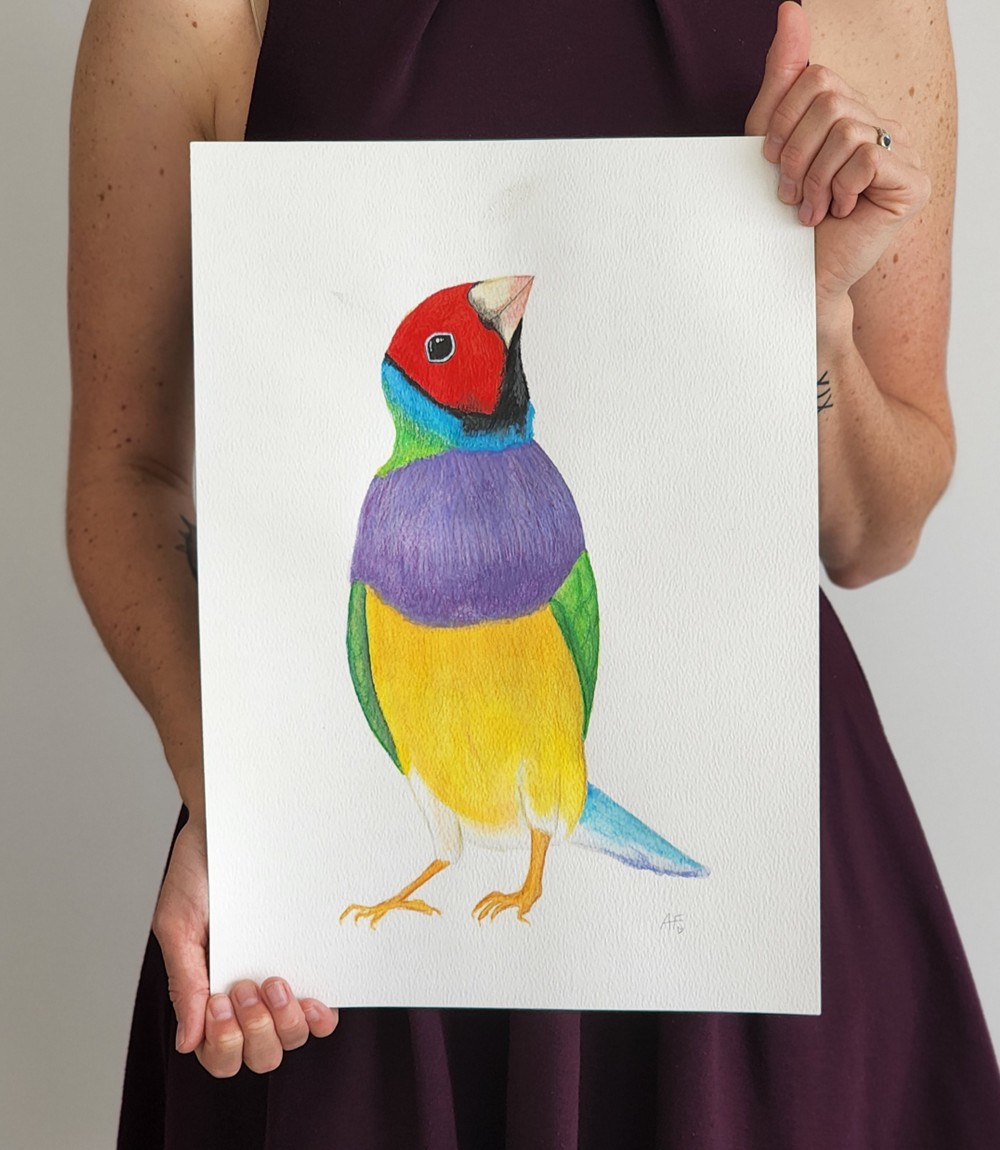
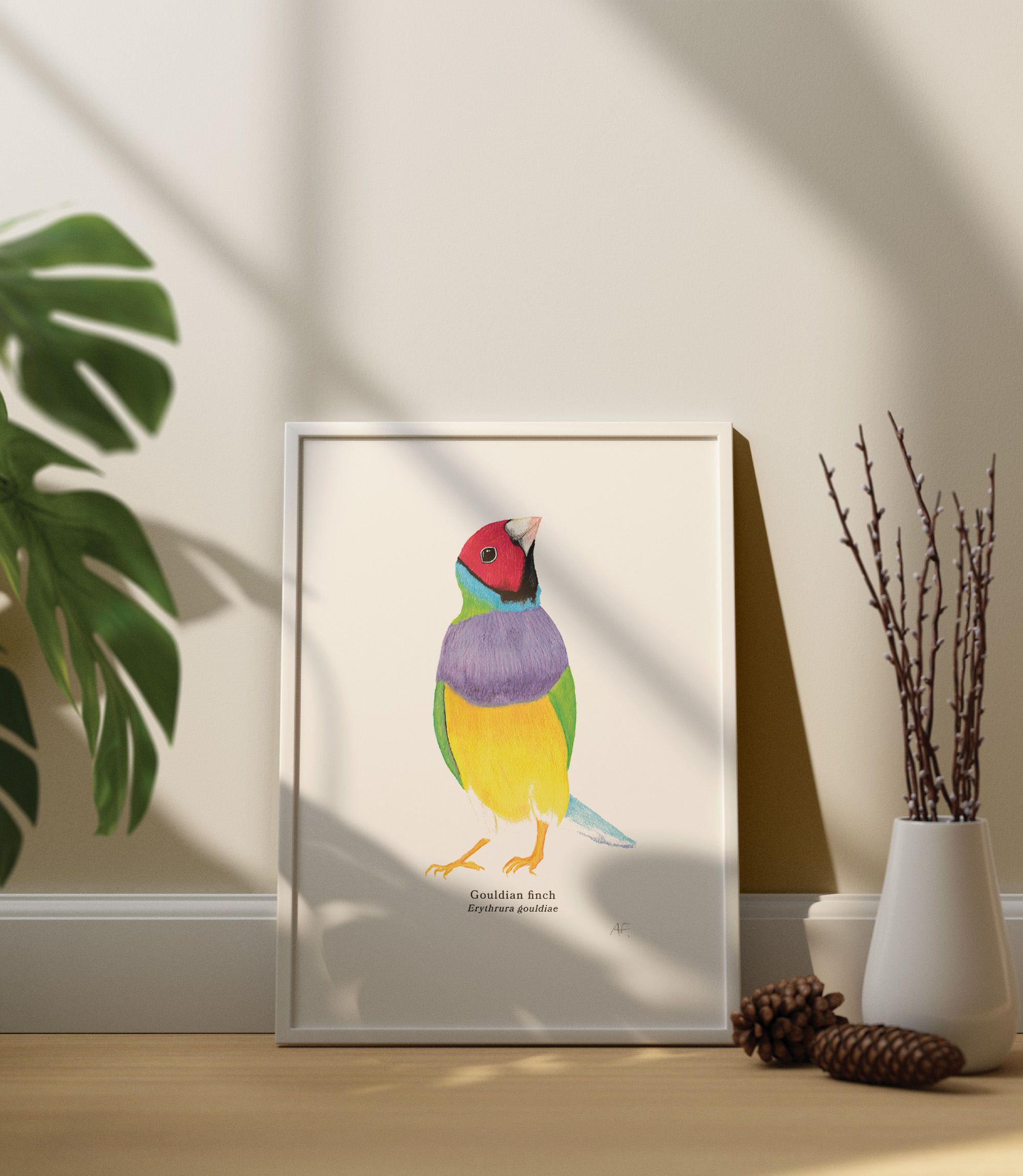
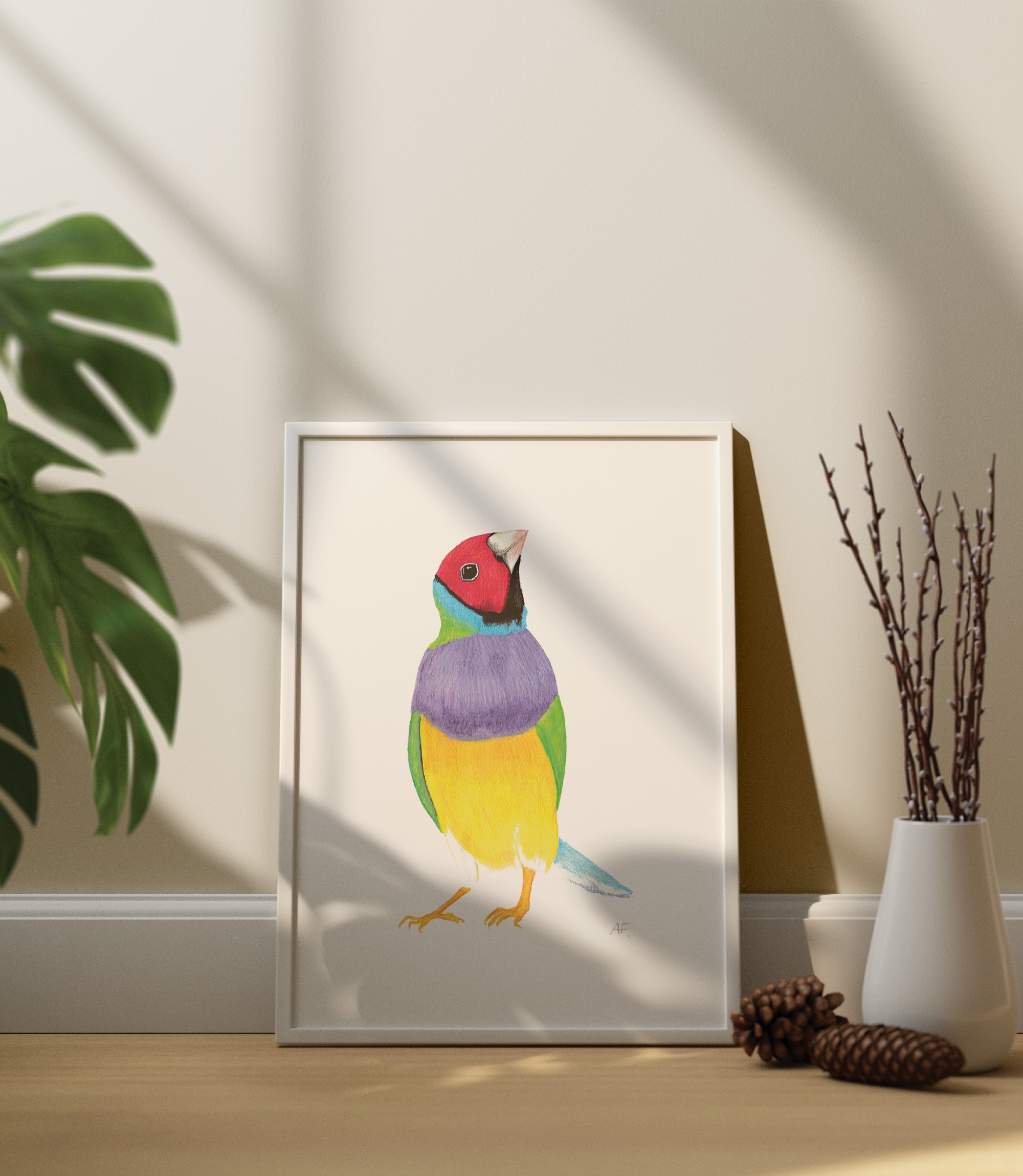
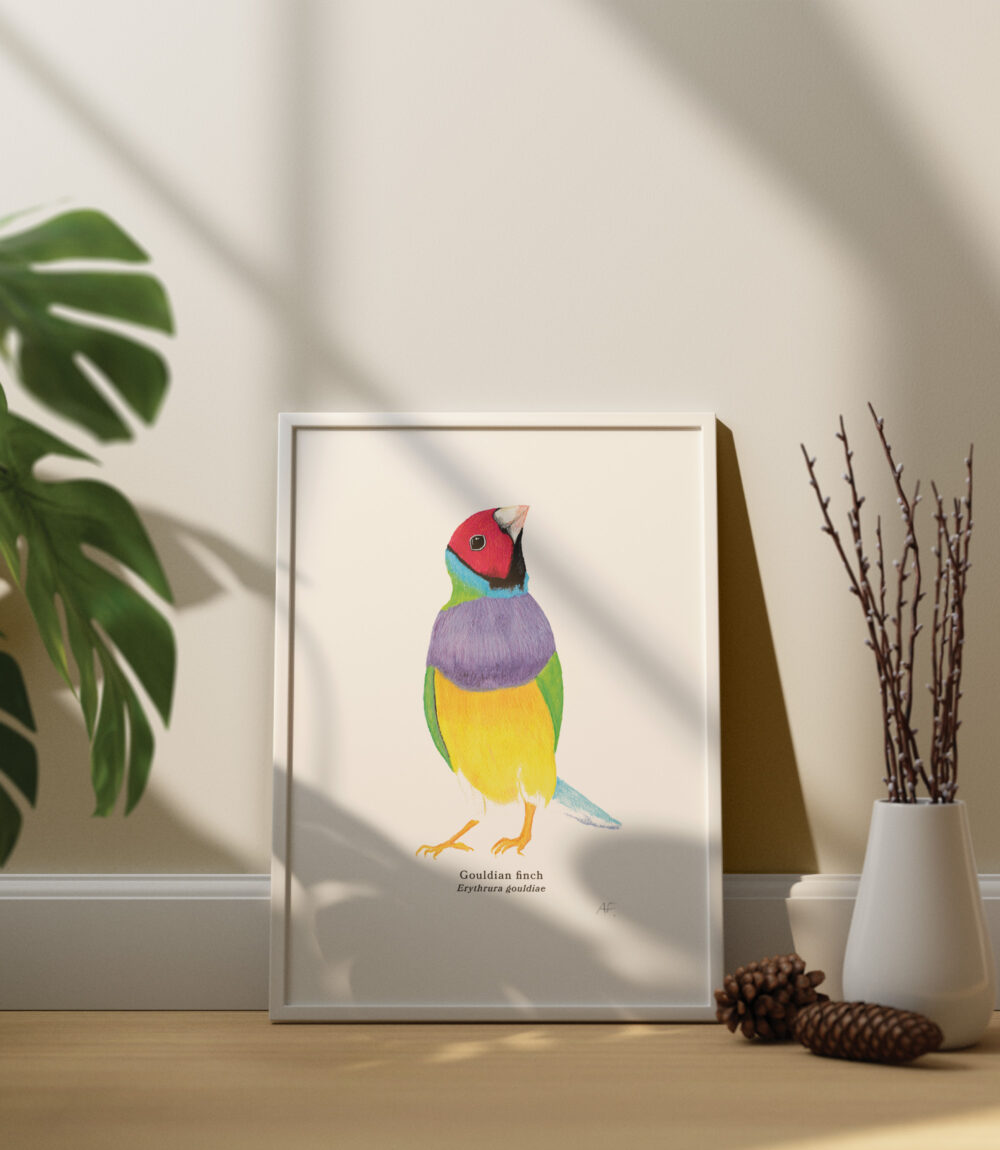
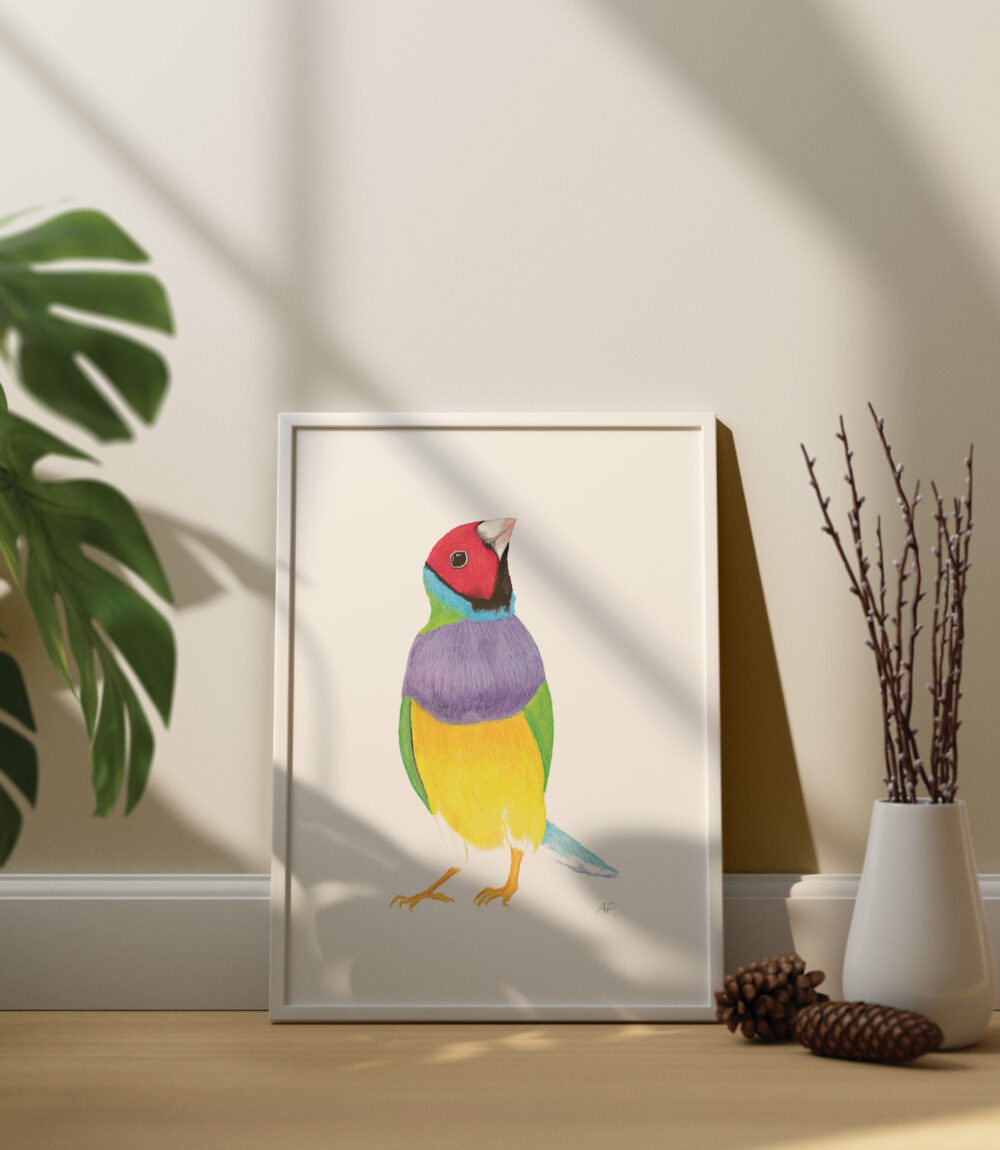
Gouldian Finch Print
$35.00 – $75.00Price range: $35.00 through $75.00
Radiant, rare and vulnerable—a living jewel of Australia’s savannas. Perfect for bird lovers and conservation nerds.
Product details
Species Name
Want to include the species name (common and scientific) below the illustration? Let me know in your order.
What you’ll get
White space is added to the digital version of the artwork to accommodate a matboard. The artwork will be portrait orientation.
My paintings are printed onto fancy gold fibre gloss (310gsm) paper. This paper makes the colours pop without the in-your-face type of reflective gloss.
Time Frames
I’ll ship your order within two weeks of receiving it (but hopefully sooner)!
Shipping is through Australia Post, with a flat rate of AU $11 (domestic) or AU $29 (international). I’m always on the hunt for cheaper shipping alternatives!
Got a question? Want to customise?
Reach out! I’ll be stoked to help.
Meet the Gouldian Finch
Erythrura gouldiae
Gouldian finches are the style icons of the bird world, and they are all about the matchy-matchy.
Gouldian finches come in different genetic variations—mostly red-faced, black-faced, or the much rarer yellow-faced. The female Gouldian finch has figured out, all on her own, that if she mates with a baby daddy who has a different head colour to her, then her kids will likely die young; especially if the kids themselves are girls.
So the mum decides which sex her kids will be!
If she has the same coloured head as her partner (good genetic compatibility), she will hatch lots of eggs, and an equal number of girls and boys. If she and her mate have different coloured heads, she will produce fewer eggs and make more boys than girls! She’ll even pay less attention to them because of the expected premature death. Rough.
The researchers who discovered this also tried tricking the lady finches by painting red-headed males black, and vice versa. The ladies fell for it and followed the same rules as if the painted head colour was legit.
Beauty is only feather deep.
These little guys are endangered in the wild due to habitat loss, invasive species, and fire mismanagement. It’s estimated that there may only be about 2,500 adults left in the wild. Conservation groups are working hard to restore their population; you can help by donating to these efforts or spreading the word.
Related products
- Select options This product has multiple variants. The options may be chosen on the product page$35.00 – $75.00Price range: $35.00 through $75.00
- Select options This product has multiple variants. The options may be chosen on the product page$35.00 – $75.00Price range: $35.00 through $75.00
- Select options This product has multiple variants. The options may be chosen on the product page$35.00 – $75.00Price range: $35.00 through $75.00
- Select options This product has multiple variants. The options may be chosen on the product page$35.00 – $75.00Price range: $35.00 through $75.00