
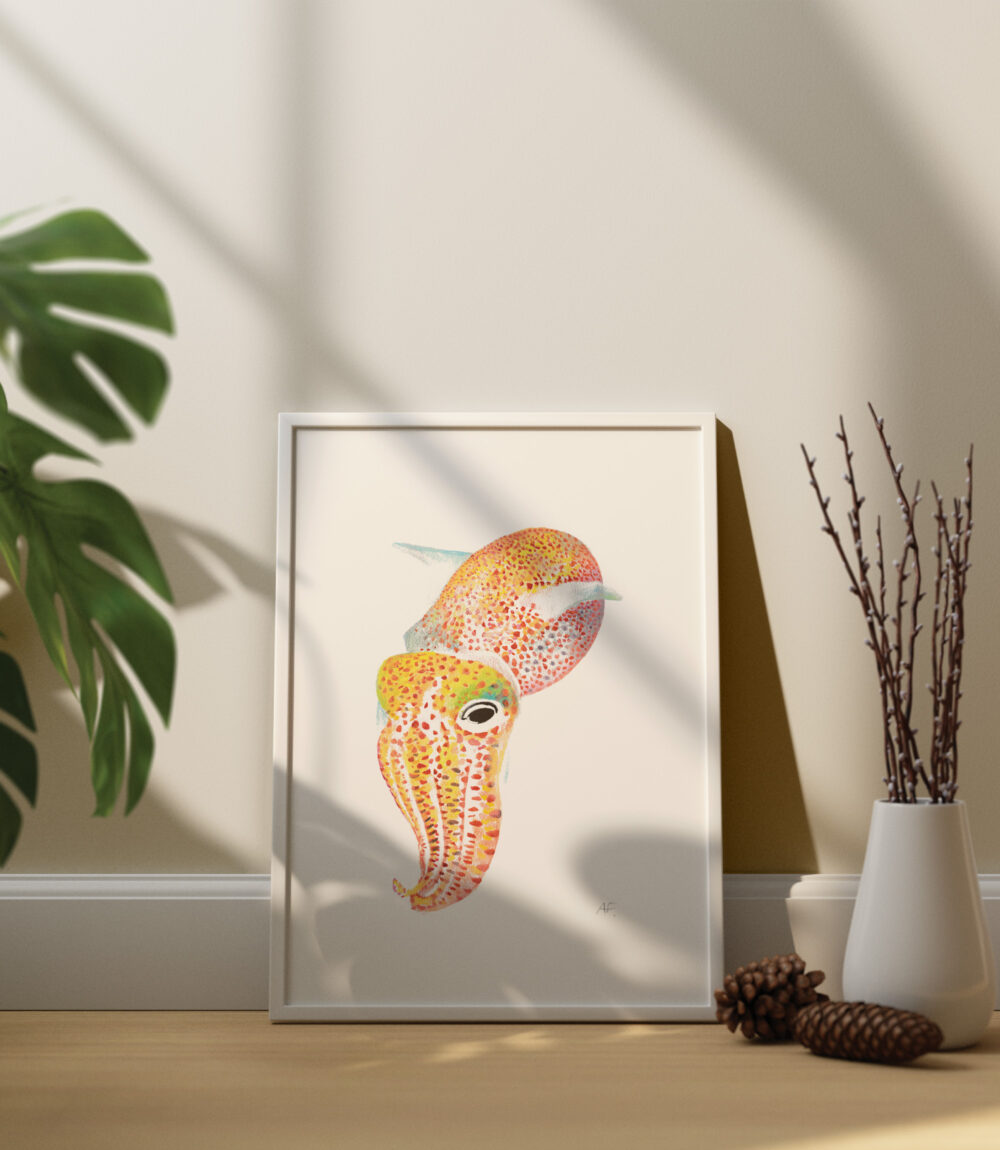
Bobtail Squid Print
$35.00 – $75.00Price range: $35.00 through $75.00
Cute, clever, and bioluminescent—perfect for science lovers and ocean nerds. David Attenborough himself described this as “a joy!”.
Product details
Species Name
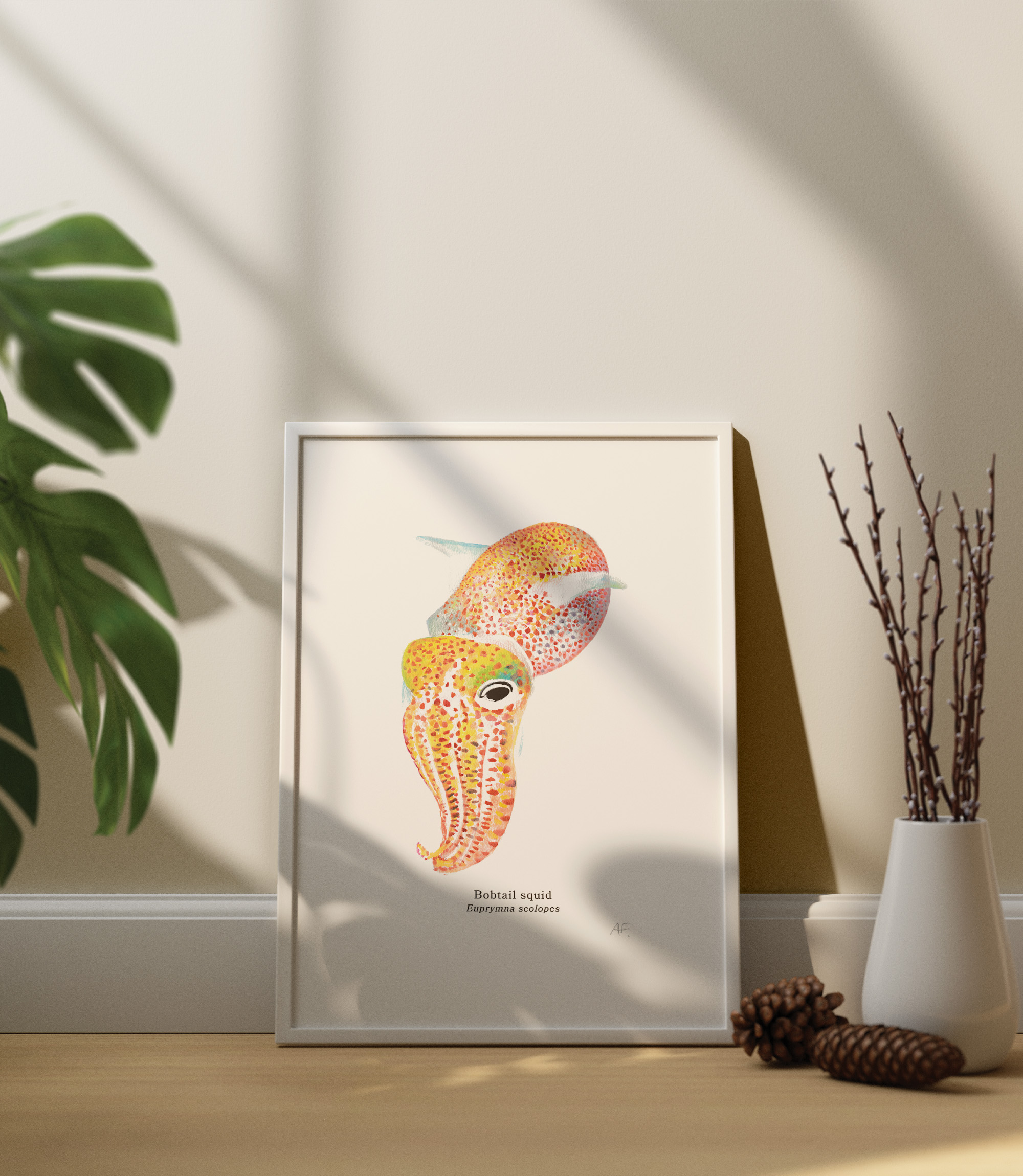
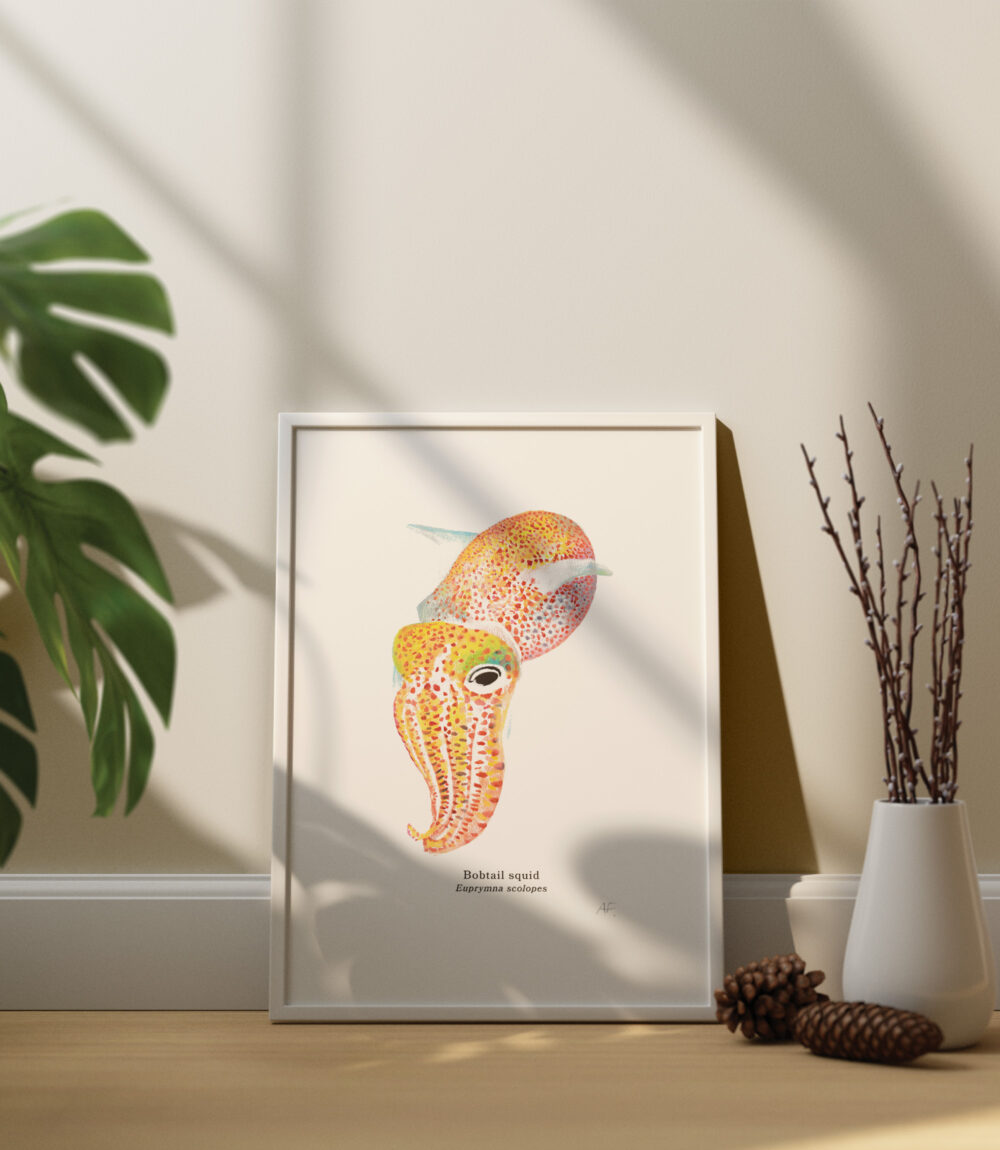
Want to include the species name (common and scientific) below the illustration? Let me know in your order.
What you’ll get
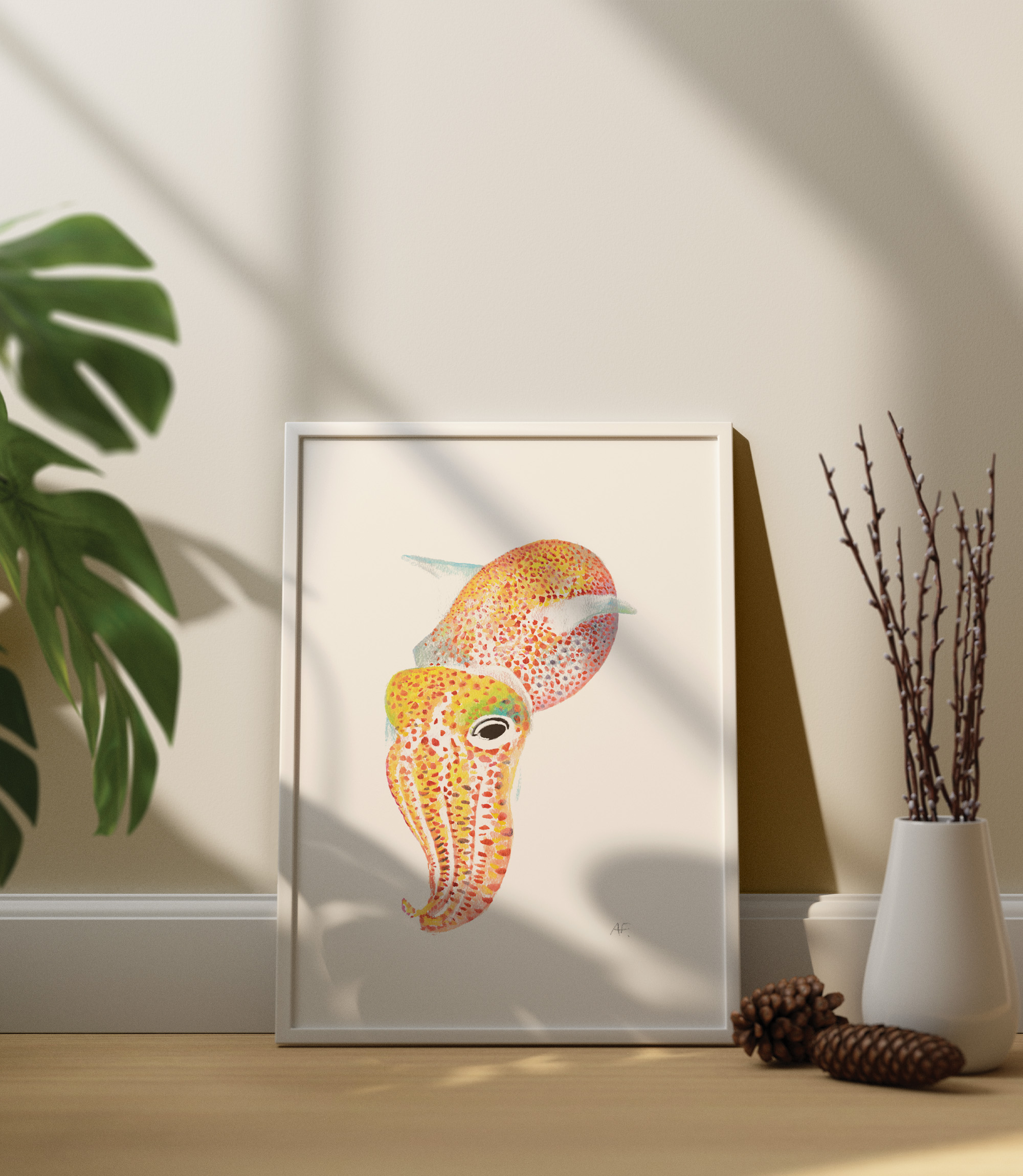
White space is added to the digital version of the artwork to accommodate a matboard. The artwork will be portrait orientation.
My paintings are printed onto fancy gold fibre gloss (310gsm) paper. This paper makes the colours pop without the in-your-face type of reflective gloss.
Time Frames
I’ll ship your order within two weeks of receiving it (but hopefully sooner)!
Shipping is through Australia Post, with a flat rate of AU $11 (domestic) or AU $29 (international). I’m always on the hunt for cheaper shipping alternatives!
Got a question? Want to customise?
Reach out! I’ll be stoked to help.
Meet the Bobtail Squid
Euprymna scolopes
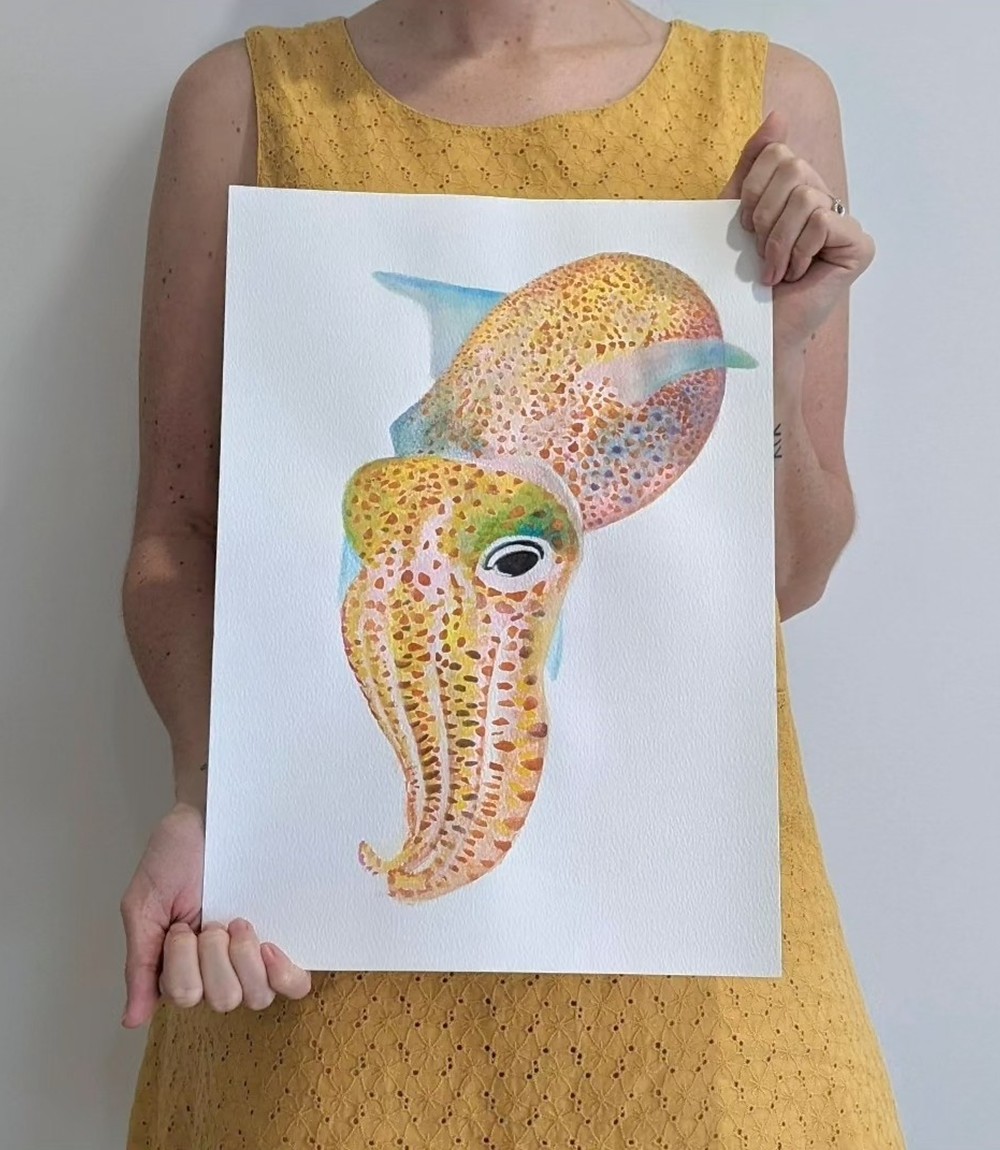
Bobtail squid are cephalopods, closely related to cuttlefish. They are about the size of a thumb, making my painting roughly 6 times larger than life!
They swim using their cute little paddle-shaped fins or by jet propulsion, and munch on even tinier crustaceans.
During the day, they bury themselves in the sandy seafloor using some of their little arms to drag sand over their head and body.
The surface of their skin contain two types of cells:
- one that glues the sand onto their body (to maintain camouflage even if they’re flushed out by predators),
- one that allows them to quickly ditch their entire sand coat as a decoy if they need to make a quick escape.
They can also squirt ink if they need, but not very much because these little friends are tiny.
Inside their mantle is a light organ, which is home to bioluminescent bacteria who have a symbiotic relationship with their squid pal. This light organ is occupied and controlled by the bacteria, who in return nibble on a sweet sugary amino acid soup made by the squid. The light organ provides enough light for the squid to hunt at night, but also makes them partly invisible.
The bacteria match the light intensity of moonlight and starlight in order to obscure the squid’s silhouette when viewed from below. Baby bobtails aren’t born with the bacteria, but within the first few hours of their tiny lives they find enough to light up.
This symbiotic relationship is so unique and effective that it’s been studied by the U.S. Air Force to improve aircraft camouflage.
Related products
- Select options This product has multiple variants. The options may be chosen on the product page
- Select options This product has multiple variants. The options may be chosen on the product page
- Select options This product has multiple variants. The options may be chosen on the product page
- Select options This product has multiple variants. The options may be chosen on the product page